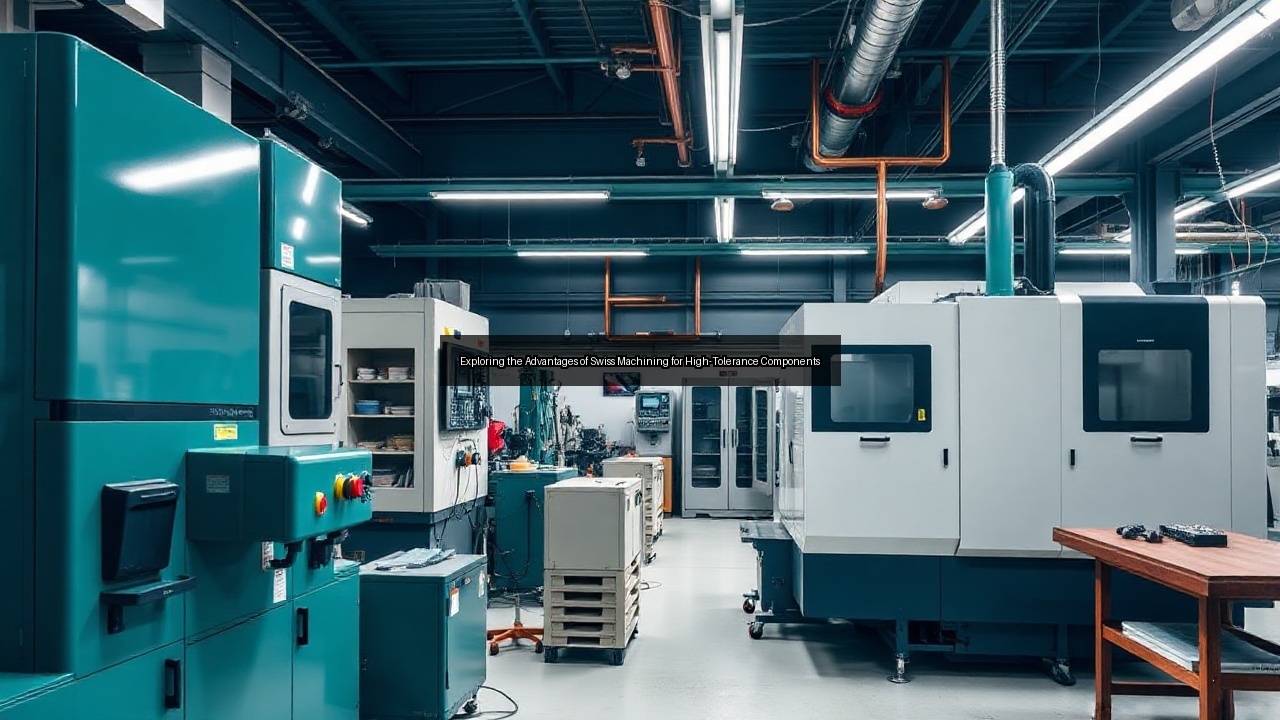
Exploring the Advantages of Swiss Machining for High-Tolerance Components
Understanding Swiss Machining and Its Applications
What is Swiss Machining?
Swiss machining, also known as Swiss screw machining, is a highly specialized form of precision machining that focuses on creating small, intricate components. This technique utilizes a Swiss-type lathe, which incorporates a sliding headstock that allows the workpiece to move along multiple axes simultaneously. The result is a manufacturing process that excels in producing parts with exceptional accuracy and tight tolerances. Swiss machining is particularly adept at handling long, slender components that require intricate features, making it ideal for industries demanding high precision.
Key Features of Swiss Machining
Swiss machining stands out for its unique features, which significantly enhance its effectiveness in producing high-tolerance components. The sliding headstock provides continuous support to the workpiece, reducing vibrations and ensuring stability during machining. This feature proves invaluable when dealing with delicate materials like Teflon, nylon, or acetal. Additionally, Swiss machining integrates advanced tooling techniques, allowing for complex operations such as threading, milling, and drilling within a single setup. cnc machining services ISO 9001 certification in many Swiss machining services guarantees adherence to stringent quality standards, further ensuring the reliability of the components produced.
Common Applications in Various Industries
Swiss machining finds applications across a broad spectrum of industries due to its unparalleled precision and versatility. In the medical field, Swiss machined components play a crucial role in producing surgical instruments and implants where accuracy is paramount. Aerospace manufacturers utilize Swiss machining for crafting lightweight yet robust parts from materials like stainless steel and copper, which are essential for aircraft performance and safety. Additionally, the automotive sector relies on Swiss machining for producing precision parts such as pins and screws that meet stringent safety standards. The combination of high volume and consistent quality makes Swiss machining an invaluable asset in modern manufacturing.
Benefits of Swiss Machining for High-Tolerance Components
Unmatched Precision and Accuracy
Precision stands as the cornerstone of Swiss machining. The technology offers remarkable accuracy, capable of producing components with tolerances as tight as ±0.0005 inches. This level of detail is critical in applications where even the smallest deviation can lead to significant issues. Swiss machining achieves these high tolerances through its unique setup, which minimizes tool movement and maximizes stability. When fabricating intricate parts, such as those used in CNC machining services, accuracy in every detail becomes essential. The ability to produce screw machined components with high precision allows manufacturers to reduce the risk of failure in sensitive applications, ultimately enhancing the overall quality of their products.
Enhanced Speed and Efficiency
Swiss machining not only excels in precision but also in speed and efficiency. The design of Swiss lathes enables rapid production cycles, significantly reducing the time from concept to finished product. The simultaneous machining capabilities allow for multiple operations to occur in one setup, minimizing downtime associated with tool changes. This efficiency proves advantageous in high-volume production runs, where maintaining throughput is crucial. Companies like McCormick Industries leverage the speed of Swiss machining to meet tight deadlines while still delivering high-quality components. The integration of Just-In-Time (JIT) manufacturing further enhances operational efficiency, reducing inventory costs and ensuring timely delivery.
Versatility in Material Handling
Swiss machining demonstrates exceptional versatility in handling a wide range of materials. From metals like stainless steel and copper to plastics such as PTFE and nylon, Swiss machining adapts seamlessly to various substrates. This flexibility allows manufacturers to choose the best material for their specific application without compromising the manufacturing process. The ability to machine complex geometries in different materials also expands the design possibilities for engineers and designers. Whether creating intricate components for aerospace or durable parts for industrial applications, Swiss machining consistently delivers results that meet or exceed expectations. This adaptability not only streamlines production but also fosters innovation in product design.
Swiss Machining vs Traditional Machining Techniques
Comparison of CNC Machining and Swiss Machining
Both CNC machining and Swiss machining offer unique advantages, but they differ significantly in their approach to manufacturing. CNC machining relies on fixed tooling and typically handles larger workpieces, while Swiss machining specializes in smaller, complex components. The primary distinction lies in the movement and support of the workpiece; Swiss machining provides continuous support throughout the machining process, which enhances precision and reduces the risk of damage to delicate parts. While CNC machining is ideal for mass production and larger parts, Swiss machining excels in applications requiring tight tolerances and intricate designs. The choice between the two often depends on the specific requirements of the project at hand.
Advantages of Swiss Screw Machining
Swiss screw machining offers several advantages that make it a preferred choice for manufacturers. One of the most notable benefits is the ability to produce long, slender parts with high dimensional accuracy. This capability makes Swiss screw machining particularly effective for creating components such as pins and screws, which often require precise threading and finishing. Moreover, Swiss machining can efficiently handle multiple operations in a single setup, reducing labor costs and production time. Its compatibility with various materials, including metals and plastics, further enhances its appeal. Companies seeking to optimize their production processes often turn to Swiss screw machining for its ability to deliver high-quality components rapidly and efficiently.
Case Studies: Aerospace and Medical Applications
Case studies in aerospace and medical applications highlight the effectiveness of Swiss machining. In aerospace, manufacturers utilize Swiss machined components for critical systems that demand high reliability, such as fuel systems and engine parts. The precision of Swiss machining ensures that these components meet stringent safety regulations while maintaining optimal performance. In the medical field, the creation of surgical instruments requires uncompromising precision, where Swiss machining’s accuracy shines through. For example, a leading medical device manufacturer turned to Swiss machining for developing a new line of surgical tools. The result was a significant reduction in production time and improved quality of the instruments, showcasing the advantages of this machining technique in high-stakes environments.
Implementing Swiss Machining in Manufacturing Processes
Choosing the Right Swiss Machining Service
Selecting the right Swiss machining service is crucial for achieving desired outcomes in manufacturing. Factors to consider include the service provider's experience, capabilities, and certifications like ISO 9001. An experienced Swiss machining service can handle diverse projects, ensuring that they can adapt to various requirements. Additionally, reviewing their portfolio for past projects can provide insight into their expertise in specific industries, such as aerospace or medical applications. Companies should also assess the technology and machinery used by the service provider, as modern CNC machines and tools often lead to improved accuracy and efficiency in production.
Logistics Management and Just-In-Time (JIT) Manufacturing
Logistics management plays a vital role in the success of Swiss machining operations. Implementing Just-In-Time (JIT) manufacturing strategies allows companies to streamline their supply chain and minimize inventory costs. JIT enables manufacturers to produce components only as needed, reducing waste and storage requirements. This approach aligns perfectly with the speed and efficiency of Swiss machining, allowing for rapid response to market demands. Companies that effectively manage logistics alongside Swiss machining can enhance their overall operational efficiency and maintain a competitive edge in the manufacturing landscape.
Future Trends in Swiss Machining Technologies
The future of Swiss machining looks promising, with advancements in technology driving innovation in the field. Emerging trends include the integration of artificial intelligence and automation into Swiss machining processes, enhancing efficiency and precision. Manufacturers are also exploring the potential of additive manufacturing in conjunction with Swiss machining to create hybrid solutions that combine the strengths of both techniques. As industries continue to push for greater precision and efficiency, Swiss machining will likely evolve to meet these demands. Staying informed about these trends will help manufacturers remain competitive and adaptable in an ever-changing market.
See Also
- Achieving Unmatched Precision with Swiss CNC Machining Services
- From Copper to Nylon Exploring Versatile Materials in Swiss Machining
- Understanding ISO 9001 Standards in Swiss Machining Services
- Innovative Materials in Swiss Machining Teflon and Beyond
- Enhancing Product Quality with Swiss Machining Fabrication Techniques